Thursday, June 29, 2017

Life in a Hostile Fishbowl

Catch the Jew! by Tuvia Tenenbom.
Book Review by Michael Isenberg.

Tuvia Tenenbom is a genius at getting people to talk to him.

In 2014, he took his ingenuity to Israel, where he engaged Israelis, Palestinians, Europeans, Members of the Knesset (MKs), Jewish fundamentalist con men, humorless lefty journalists, lascivious monks, Tel Aviv prostitutes, and feral cats in conversation. Usually posing as a German reporter, but sometimes an Arab, and now and then a rabbi, Tuvia entices his victims to reveal their inmost thoughts, often with hilarious results, which he collected in his book, Catch the Jew.

The picture on the cover suggests that the title character—the Jew that everyone is trying to catch—is Tuvia himself. An Arab, a Brit, and what appears to be a biker chase him down Keystone Cop-like, no doubt outraged at the ease with which he conned them.

Alas, it is not Tuvia who is their quarry. And it isn’t very funny.

It seems that Israel is infested with representatives of Non-governmental Organizations or NGOs. Mostly funded by Europeans, especially Germans, they give generously to the Palestinians. A visitor to Hebron, for example, will find beautiful, spacious Palestinian homes—each with a plaque crediting the donor—and wretched, cramped Jewish slums.

But home building is just a peripheral undertaking for the NGO folk. Like Myrna Minkoff, crisscrossing the Civil Rights-era South in A Confederacy of Dunces, they are on a fact-finding mission: to “document” Israeli mistreatment of Palestinians. If the Israelis aren’t obliging enough to provide mistreatment, these Social Justice Warriors egg on the Palestinians to provoke some. Also like the hapless Miss Minkoff, they have a tendency to embrace rats, thanks to a myopic belief that the rats are in fact squirrels. They thereby pick up a menagerie of media enablers and self-hating Israelis eager to help them “catch the Jew.”

Some of these crusaders confess—at odds with their organizations’ official policies—that their ultimate objective is the destruction of the Jewish State. Tuvia attributes this desire to plain, old anti-Semitism. “Where else could one practice his or her darkest wish for Judenfrei territories and still be considered liberal?”

The anti-Semitism of NGOs is the main takeaway from the book. But since this blog is about Islam, I want to focus on Tuvia’s experiences with Palestinians. (Yes, I know, not all Palestinians are Muslim. Many are Christians, and Tuvia engaged them too. The short version is they share their Muslim brothers’ attitudes toward Israel).

Tuvia loves the Palestinians. He loves their music. He loves their beautiful hijabs. He loves their cuisine, chock full of fresh tomatoes and cucumbers. And he loves them as people, even when he’s certain they have blood on their hands, as is the case with General Jibril Rajoub, the onetime Palestinian spymaster. Tuvia really likes Jibral.

I believe that Tuvia is sincere when he says that he looks at Palestinians as human beings and not as the poster children for a cause. IMHO that’s why they open up to him. They tell him about their lives and their hopes. And they tell him about Israel. In their view, everything bad in the world is Israel’s fault, regardless of logic. Anything bad about Israel they believe without question, no matter how absurd. And sadly, there is no shortage of absurdity:

  • There’s the taxi driver who claims that two hundred Jewish settlers are in the midst of storming the al-Aqsa Mosque, the third holiest site in Islam. Tuvia searches news outlets for this story. One would think it would be of major international import. It takes two attempts, but he finally discovers it on the Arabic version of al-Jazeera, accompanied by a photo of five—far short of two hundred—“seemingly non-Muslim men” standing peacefully in front of the mosque.
  • There’s al-Quds University, where a class of two Palestinian students learn—from European teachers—how oppressed they are. The receptionist claims that Jews have taken “many” Palestinian homes in Jerusalem. When pressed, he admits “many” is in fact thirty—over a period of sixty years!
  • There’s the activist who believes the brown hills of the West Bank used to be green, but then the Jews stole all the water.

  • There’s the Arab contractor who plants a tree at the home he’s building for his Jewish client. It seems like a touching gesture of friendship from an Arab to a Jew, until he explains that he intends to occupy the house himself as soon as the Jews are driven into the sea.
  • There’s the Bedouin activist who warns of “creeping apartheid,” even though he lives in mostly Jewish Beer Sheva. He complains that “Bedouins stand no chance of succeeding,” even though he holds a professorship at Ben Gurion University.
  • There’s the man Tuvia met at Gibril Rajoub’s house who thinks everything would be better if only Rommel had overrun Palestine in 1942. “We would have had all the land since no Jew would have survived.” Another man, a protester on his way to a media-staged anti-Israel demonstration, expresses similar approval for Nazism. Amid the party-like atmosphere of the protest bus, he says, “Hitler should have taught us what to do with the Jews, how to be thorough.” Paradoxically, despite this oft-heard admiration for Nazis, the notion that the Israelis are the new Nazis is also common.
  • There’s the lady who claims to have pictures on her phone of Israeli soldiers throwing bombs into the bedrooms of Arab children. She was going to show them to Tuvia, but just then her phone broke.

    Tuvia’s stories constitute an important source document for anyone who wants to get a feel for life in the hostile fishbowl that is Israel (In fact, I bought a copy for my dad for Father’s Day).

    Ultimately, though, Tuvia’s stories are just that. Stories. They give us understanding, but not precision. Entertainment, but not science. Subject to exaggeration, selective editing, and spin. They show us that some Palestinians hate Israel beyond the point of rationality, but don’t show us how widespread that attitude is. I did some research into that, which I share in a follow-on post.

    Michael Isenberg writes about the Muslim world, medieval and modern. His forthcoming novel, The Thread of Reason, is a murder mystery that takes place in Baghdad in the year 1092 and depicts the battle for the Muslim soul between those who embrace science and tolerance, and those who would rather throw in their lot with mysticism and persecution.

  • Sunday, June 25, 2017

    Mideast Week in Review

  • US Sinks Deeper into Syrian Quagmire.
  • Saudi Succession.
  • Qatar Sanctions Crisis.
  • Record-setting Sniper Shot.

    by Michael Isenberg

    US Sinks Deeper into Syrian Quagmire: The United States continues to drift into all-out war with Syria and its Russian ally. With no apparent long-term strategy, US forces shot down an aircraft belonging to the Syrian government last Sunday. This was the first such action by the US during the Syrian conflict, and comes on the heels of the first take-down of a Syrian drone and the first bombing of Syrian government troops. The Pentagon said the Syrian plane had bombed Syrian Democratic Forces troops who were engaged in the effort to capture the ISIS capital of Raqqa.

    In response, Russia announced it would track US coalition aircraft as potential targets.

    In what may or may not be a related story, the following day a Russian fighter jet flew dangerously close—five feet—to an American reconnaissance jet over the Baltic Sea.

    Read more—

  • US coalition downs first Syria government jet (BBC)
  • Syria conflict: Australia suspends anti-IS raids (BBC)
  • Australia to resume airstrikes against Islamic State targets soon (AP)
  • US releases dramatic photos of 'unsafe' Russian jet intercept (CNN)


    Saudi Succession: King Salman of Saudi Arabia has named his son, Muhammad bin Salman, as heir to the throne, replacing the king’s nephew, Muhammad bin Nayef. According to the BBC, the new crown prince has spearheaded the “Vision 2030” economic plan to make Saudi Arabia’s economy less dependent on oil exports. He has also “bid to curb the power of the conservative religious establishment.” In foreign policy, he is the “driving force” behind the kingdom’s military intervention in Yemen, which has been ineffective in bringing an end to the civil war there. Thus, the change to the line of succession augurs stability at home and chaos abroad.

    Read more—

  • Saudi king's son Mohammed bin Salman is new crown prince (BBC)
  • Mohammed bin Salman's rise marks climax of leadership revolution (BBC)


    Qatar Sanctions Crisis:It’s been two weeks since a coalition of Arab countries, led by Saudi Arabia, imposed sanctions on the nation of Qatar. Under pressure from US Secretary of State Tillerson, the coalition has finally released its list of demands. These including limiting ties to Iran, cutting ties with the Muslim Brotherhood and US-designated terrorist organizations, and closing a Turkish air base in the country. Furthermore, in the name of preventing Qatar from meddling in their internal affairs, the coalition nations insist on meddling in Qatar’s internal affairs, demanding that Qatar shutter its flagship news outlet, al-Jazeera, and refuse citizenship to coalition nationals.

    In response to the demands, Qatar’s foreign minister, Muhammed bin Abd’ul-rahman al-Thani, said, “The US secretary of state recently called upon the blockading nations to produce a list of grievances that was ‘reasonable and actionable.’ The British foreign secretary asked that the demands be ‘measured and realistic.’ This list does not satisfy that criteria.” That’s diplomat-speak for “F—k off.”

    IMHO, the demands will drive Qatar further into the arms of Iran, opposite of what’s intended. Indeed, this is already happening. Qatar depends heavily on imports; 90% of its food comes from abroad. Stepping in to fill the gap created by the sanctions, Iran is now delivering 1,100 tons of produce to Qatar daily by boat.

    Read more—

  • Qatar row: Arab states send list of steep demands (BBC)
  • Qatar says list of demands by Arab states not realistic (BBC)


    Record-setting Sniper Shot: A Canadian sniper killed an ISIS fighter in Iraq from a distance of 3,450 meters—over two miles—far exceeding the previous record. Here’s how it compares with other long-distance shots:

    Canada halted airstrikes in Iraq last year. Snipers have less potential for civilian casualties than bombs.

    Read more—

  • Canadian sniper 'kills IS militant two miles away' (BBC)

    Michael Isenberg writes about the Muslim world, medieval and modern. His forthcoming novel, The Thread of Reason, is a murder mystery that takes place in Baghdad in the year 1092 and depicts the battle for the Muslim soul between those who embrace science and tolerance, and those who throw in their lot with mysticism and persecution.

    Photo credits: CNN, Globe and Mail

  • Sunday, June 4, 2017

    Mideast Week in Review

    by Michael Isenberg.

  • Ramadan Terrorist Attacks.
  • Wonder Woman banned in Lebanon.
  • Bahrain Government Cracks Down on Opposition.
  • Trump Backs Away from Israel Embassy Promise.

    Ramadan Terrorist Attacks: Last night's murder of at least seven innocent civilians in London was one of several terrorist attacks last week, which also included three bombings in the Mideast.

    In Kabul, terrorists detonated a massive truck bomb near Zanbaq Square, one of the busiest sections of the city. The bomb, concealed in a water truck, killed at least ninety people.

    According to one eyewitness, “It was so crazy. The sound was very strong and the ground shook. Everyone around me was shocked. All of the buildings and offices were broken, the windows were blown out. It was rush hour, most of the people were going to their offices or going to the shops. There were large crowds of people going about their days.”

    The Taliban denied involvement and no one else has stepped forward to claim responsibility. State security officials fingered the Pakistan-based Haqqani Group.

    In view of the number of embassies in the neighborhood, some suspect that foreign nationals were the target. But as one woman who works nearby pointed out, “It's always Afghans that are harmed and get killed.”

    CNN notes that this is just one of six major terrorist attacks in Afghanistan during the past year. The United States is considering sending additional troops in light of the worsening security situation.

    Baghdad, meanwhile, suffered twin attacks of its own. A Daesh (ISIS) suicide bomber detonated a car bomb near an ice cream stand in the Karrada district, where crowds were celebrating Ramadan Monday night. Targeting an ice cream stand, a place where children gather, is despicable even by Daesh standards. The bombing was followed by a second attack, close to the Shuhada Bridge. Daesh, which is Sunni, said in a statement that it chose these particular neighborhoods in order to take aim at their predominantly Shiite residents. At least twenty-six people were killed in the two attacks.

    The London, Kabul, and Baghdad attacks, combined with last week’s massacres of concertgoers in Manchester and Coptic Christians near Cairo, represent a pattern, which has persisted for several years now, of stepped-up terrorist activity leading up to and during the holy month of Ramadan.

    Read more—

  • Kabul blast: Attack kills 90 near diplomatic area in Afghanistan (CNN)
  • Iraq conflict: Baghdad ice cream parlour hit by suicide attack (BBC)
  • ISIS's Perverse, Bloody Interpretation of Ramadan (The Atlantic)
  • ISIS Calls for ‘All-out War’ on West during Ramadan (Newsweek)


    Wonder Woman Banned in Lebanon: The Lebanese government banned the film Wonder Woman in the country. The official rationale: the actress playing the title role, Gal Gadot, is Israeli, and therefore the ban on the movie, which was filmed in four countries, none of which were Israel, is in line with Lebanon’s boycott of Israeli products. The decision, coming as it did hours before the scheduled premiere, took theaters and moviegoers by surprise. The movie had been heavily promoted in Lebanon and many were disappointed by the ban.

    (They were right to be disappointed—Wonder Woman is awesome! See my movie review on my other blog, Nerds who Read.)

    Read more—

  • Wonder Woman banned by Lebanon over Israeli lead Gal Gadot (BBC)
  • She is Wonder Woman: Hear her Roar! (Nerds who Read)


    Bahrain Government Cracks Down on Opposition. The BBC reported that in Bahrain this week, a court dissolved the National Democratic Action Society, the country’s foremost secular opposition group, on the grounds of “advocating violence, supporting terrorism, and incitement to encourage crimes.” In a statement, Amnesty International called the charges “baseless and absurd” and noted they were part of a “general clampdown on human rights” by Bahraini authorities.

    Read more—

  • Bahrain court dissolves main secular opposition group (BBC)
  • Bahrain heading for total suppression of human rights as secular opposition group banned (Amnesty International)


    Trump Backs Away from Israel Embassy Promise. President Trump this week, following in the footsteps of his last three predecessors, renewed a waiver to a 1995 law requiring the United States to move its embassy in Israel from Tel Aviv to Jerusalem. In renewing the waiver, Mr. Trump backpedaled on a campaign promise to relocate the embassy.

    Conservative Review blasts the president for the decision: "By signing the waiver, President Trump has ignored the constituents who elected him and appears to have bowed to the pressure from his 'shallow state' advisers." The White House hastened to assure those constituents that the president “made this decision to maximize the chances of successfully negotiating a deal between Israel and the Palestinians, fulfilling his solemn obligation to defend America's national security interests. But, as he has repeatedly stated his intention to move the embassy, the question is not if that move happens, but only when.”

    I confess that I don’t feel reassured by the knowledge that the delay is temporary and will last only until peace comes to the Middle East, at which point the move would be completely useless as a gesture of America's support for Israel. While I could understand the United States’ reluctance to move its embassy to East Jerusalem, which is considered occupied territory, I am mystified why moving it to unoccupied West Jerusalem, which is the seat of the Israeli government, would present any obstacle to Israeli/Palestinian talks. It's not as if West Jerusalem is an issue in the talks. Is it?

    To the best of my knowledge, Israel is the only country in the world where the United States has placed its embassy somewhere other than the nation’s capital.

    Read more—

  • Broken campaign promise: Trump reneges on Israel embassy move (Conservative Review)
  • Trump delays moving US embassy to Jerusalem (BBC)

    Michael Isenberg writes about the Muslim world, medieval and modern. His forthcoming novel, The Thread of Reason, is a murder mystery that takes place in Baghdad in the year 1092 and depicts the battle for the Muslim soul between those who embrace science and tolerance, and those who throw in their lot with mysticism and persecution.
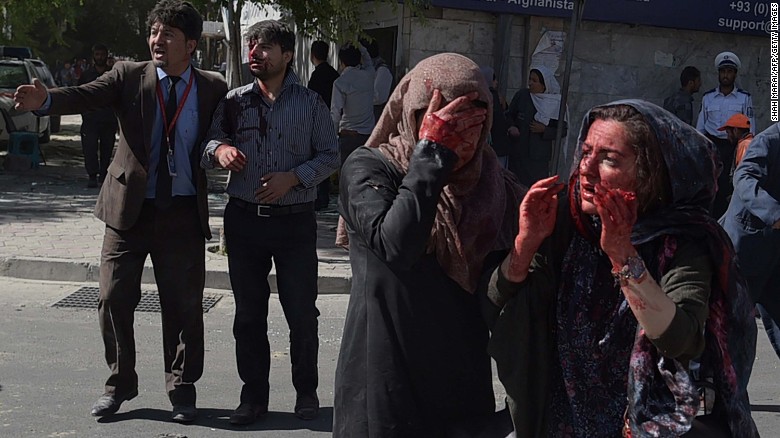
    Photo credit: CNN

  • Sunday, May 28, 2017

    Mideast Week in Review

  • Trump in Saudi, Israel
  • Turkey State of Emergency
  • Iran Election Aftermath
  • Liberation of Mosul
  • Manchester Bombing
  • Egypt Bus Attack

    by Michael Isenberg

    Trump in Saudi, Israel: Donald Trump visited Saudi Arabia and Israel this week, as the first two stops on his first foreign tour as President of the United States.

    On Sunday, Mr. Trump addressed the Arab Islamic American Summit. Those of you who follow me on social media know that I’m not a fan of the president, but I’m willing to give credit where credit is due. His Riyadh speech hit the bullseye. He called out terrorists for what they are, “barbaric criminals who seek to obliterate human life.” What a welcome change from the cringing, apologetic tone of Mr. Obama! I found it significant that he mentioned ideology six times. IMHO, he showed real insight into the War on Terror: it's a War of Ideas. Terrorists become terrorists because they accept an ideology that tells them to become terrorists.

    Following his speech, he joined King Salman of Saudi Arabia and President as-Sisi of Egypt at the opening of the Global Center for Combating Extremist Ideology. As far as I can tell, the Center, which is located in Riyadh, is a boiler room for countering jihadism on social media. While combating extremist ideology is pretty much my raison d'etre these days, there’s something creepily Orwellian about governments, some of which are already highly repressive, countering any form of speech. In any case, the three heads of state let themselves be photographed holding on to a glowing orb. The unfortunate visual, combined with the Center's sinister mission, put many in mind of a certain organization of supervillains, and #HailHydra trended for a day. But by Monday Mr. Trump was in Israel and the Interwebs had a new thing to speculate about: what did he write in the note that he left at the Western Wall?

    Read more—

  • Trump Gets One Right
  • Make Hydra Great Again
  • So, just what did Trump's note in the Western Wall say? (BBC)


    Turkey State of Emergency: The New York Times reported that in Turkey on Sunday, President Recep Erdogan stated that the state of emergency put into place after last year’s coup attempt would stay in place until “welfare and peace” returned to the nation of 80 million. According to the Times report, under the emergency measures, thousands have been jailed, and websites blocked, with no parliamentary oversight.

    Read more—

  • Erdogan Says He Will Extend His Sweeping Rule Over Turkey (NYT)
  • The Real Problem with Erdogan


    Iran Election Aftermath:Iran President Hasan Rouhani is getting back to work following his overwhelming victory in the May 19 election. The BBC reports that he faces three major challenges: 1) unemployment, 2) opposition to reform from Supreme Leader Ali Khamanei, and 3) relations with the United States.

    The third challenge was underscored by Mr. Trump during the course of his travels. In his Riyadh speech he said, “Until the Iranian regime is willing to be a partner for peace, all nations of conscience must work together to isolate Iran, deny it funding for terrorism, and pray for the day when the Iranian people have the just and righteous government they deserve.” In Israel, he vowed, “Iran will never have nuclear weapons, that I can tell you.” But Mr. Rouhani scoffed at the words of his American counterpart, which he called, “Just a show.”

    Read more—

  • Iran's President Rouhani has quite the to-do list (BBC)
  • Trump tells Israel Iran will never have nuclear weapons (BBC)
  • Rouhani dismisses Trump warning over Iran 'threat' (BBC)


    Liberation of Mosul: The slow but steady advance of the Iraqi army and its allies into the city of Mosul continues. While east Mosul is now under government control, ISIS remains entrenched in the western sector of the city.

    Liberation has not been without its cost in human life. The United States confirmed on Friday that 105 civilians died in a US air strike in March. The US had targeted two ISIS snipers with precision-guided munitions, tragically unaware that the building was used to store explosives and was also a place of refuge for residents who had been driven from their homes.

    With liberation, come the stories: the true horrors of life under ISIS. According to the BBC, these include the murder of a seven year old girl. She died screaming in front of her mother, who was also screaming, as female members of the religious police bit and pinched her to death for the crime of being alone with a male shop owner when she went to buy candy.

    Read more—

  • US air strike on IS killed 105 civilians in Iraq's Mosul (BBC)
  • Lipstick and dresses return to Mosul’s streets (BBC)


    Manchester Bombing:Tragedy struck Manchester, England Monday night when a suicide bomber detonated an explosion at an Ariane Grande concert. Twenty-two victims, as young as eight years old, died in the calamity, their hopes and dreams snuffed out in an instant.

    As the week progressed, a portrait, albeit a fuzzy one, emerged of the monster responsible. Twenty-two-year old Salman Abedi was born in England, but his ties to the Mideast are extensive. His parents are Libyan refugees. The Telegraph reports that his father belongs to the Libyan Islamic Fighting Group, "a well-known militant Islamist group in Libya, which is proscribed in Britain." The younger Abedi is thought to have traveled recently in Syria and Libya. There is some question as to when and how he became radicalized. According to some reports, he drank alcohol until as late as last year, but his travels changed him. His sister said, “I think he saw children—Muslim children—dying everywhere, and wanted revenge.” I am skeptical. IMHO, jihadism is motivated primarily by its own ideology; anything the West has done is secondary. There is some evidence this was the case with Abedi. Contradicting accounts of a recent conversion to jihadism, The Telegraph writes there were at least five reports to authorities of incidents, going back five years, of Abedi showing sympathy to terrorists. These included telling friends that "being a suicide bomber was okay," and getting banned from the local mosque after a run-in with an imam who had given a sermon condemning terrorism.

    So Abedi was on the authorities' radar long before he launched his hideous attack. It occurred to me that he had that in common with Dzhokhar Tsarnaev, the older of the Boston Marathon bombers, and Omar Mateen, the Pulse nightclub shooter. In all three cases, the authorities failed to prevent them from carrying out their evil intentions. There hasn’t been much discussion about why counter-terrorist agencies have been unable to do more in these cases. Possibly they are overwhelmed with such reports, and are unable to distinguish the real threats. Possibly red tape limits their ability to act. Clearly it’s something that the US and its allies need to take a closer look at.

    Read more—

  • Remembering the Manchester Victims
  • Everything we know about Manchester suicide bomber Salman Abedi (Telegraph)
  • Security services missed five opportunities to stop the Manchester bomber (Telegraph)
  • Manchester attack: The Libya-jihad connection (BBC)


    Egypt Bus Attack: Alas, Manchester was not the only significant terrorist attack this week. Near Cairo on Friday, armed militants stopped and boarded a bus full of Coptic Christians on their way to a monastery in the desert. The militants, who wore masks, opened fire, murdering at least 29. ISIS has claimed responsibility.

    Read more—

  • Egypt: At least 28 dead as gunmen fire on bus carrying Coptic Christians (CNN)

    Michael Isenberg writes about the Muslim world, medieval and modern, exposing Islamists and supporting reformers. His forthcoming novel, The Thread of Reason, is a murder mystery that takes place in Baghdad in the year 1092 and depicts the battle for the Muslim soul between those who embraced science and tolerance, and those who threw in their lot with mysticism and persecution instead.

    Photo credit: The Telegraph

  • Tuesday, May 23, 2017

    Remembering the Manchester Victims

    Analysis of last night’s terrorist attack at the Ariana Grande concert in Manchester can wait for a day or two. Today is a day to mourn and remember the victims. Among them,

  • Georgina Callander, 18. Ms. Callander was in her second year at Runshaw College in Lancashire studying Health and Social Care. She was a huge fan of Ms. Grande. Described by The Telegraph as a “Superfan,” Ms. Callander had met Ms. Grande in 2015. The day before yesterday's concert she tweeted, “SO EXCITED TO SEE YOU TOMORROW.” Ms. Callendar was the daughter of a plasterer. Her friends said she “lit up a room.”


  • Saffie Rose Roussos, 8. No, that’s not a typo. Age 8. Sapphie was a student at Tarleton Community Primary School. According to the headteacher there, Chris Upton, “Saffie was simply a beautiful little girl in every aspect of the word. She was loved by everyone and her warmth and kindness will be remembered fondly. Saffie was quiet and unassuming with a creative flair.” For more about Sapphie, see “Second Manchester bomb victim named” at The Guardian.


    To my knowledge, these are all the names that have been released so far. More as the day wears on.


    UPDATE 5:00 PM EDT The name of another of the victims has been released, John Atkinson. I haven't found much about him yet, other than that he was 26 years old, from Radcliffe, and part of a dance group.

    UPDATE 25 MAY The names of 21 of the 22 victims who died have now been released. Here is a profile from the BBC: "Manchester attack: Who were the victims?"


    Michael Isenberg writes about the Muslim world, medieval and modern.

    Photo Credits: Instagram, Collect/PA

  • Monday, May 22, 2017

    Manchester Concert Explosion

    I grieve with the people of Manchester in their hour of tragedy.

    Make Hydra Great Again

    Yesterday marked the opening of the Global Center for Combating Extremist Ideology, with King Salman of Saudi Arabia, President al-Sisi of Egypt, and President Trump in attendance. As far as I can tell, the Center, which is located in Riyadh, is a boiler room for countering jihadism on social media. While combating extremist ideology is pretty much my raison d'etre these days, there’s something creepily Orwellian about governments, some of which are already highly repressive, countering any form of speech.

    The three heads of state let themselves be photographed holding on to a glowing orb—I think it's a globe of the earth. The unfortunate visual, combined with the Center's sinister mission, have brought a certain organization of supervillains to the minds of many on them Interwebs:


    Here are some of the more entertaining posts:


    McMaster Disaster thinks that it's not a coincidence that a sinkhole opened up in front of Trump's Mar a Lago resort at the same time:


    For further coverage of the Riyadh Summit, see my posts, Trump Gets One Right and The Muslim Tweet: Daughter of Trump.

    Michael Isenberg writes about the Muslim world, medieval and modern. His forthcoming novel, The Thread of Reason, is a murder mystery that takes place in Baghdad in the year 1092 and depicts the battle for the Muslim soul between those who embrace science and tolerance on the one hand, and those who throw in their lot with mysticism and persecution on the other.